Is This PhD for You?
The Doctor of Philosophy in Applied Muamalat (Economics and Finance) is designed for scholars, researchers, and professionals who want to deepen their expertise, contribute original research, and apply Shariah principles to real-world economic and financial challenges.
Grounded in Maqasid al-Shariah principles and strengthened by advanced analytical skills, this programme empowers you to influence policy, drive innovation within the Islamic finance industry, and uphold the highest standards of integrity and professional ethics.
Why This Programme Matters Now
The world of Islamic finance is evolving rapidly — from fintech and sustainable investments to regulatory reform. There is an urgent need for scholars and professionals who can bridge Shariah principles with contemporary financial realities.
The Doctor of Philosophy in Applied Muamalat (Economics and Finance) equips you to address these challenges through research that is principled, practical, and policy-relevant.
What You Will Do in This Programme
You will conduct independent, supervised research leading to the defence of a doctoral thesis — a significant contribution to the field of Islamic finance.
Along the way, you will engage with world-class faculty, take specialised courses that complement your expertise, and participate in seminars and industry collaborations that strengthen your research and professional network.
Throughout your candidature, you will:
-

Work closely with academic supervisors
-
Participate in seminars, workshops, and training
-
Engage in research and possible industry attachments
-
Develop and defend a significant original contribution to knowledge
Upon the successful defence of your thesis, you will be conferred the PhD.
Learning Outcomes
-

Master Applied Muamalat through independent research and innovation.
-
Critically Evaluate Practices by integrating Shariah principles with modern financial systems.
-
Conduct Impactful Research that proposes solutions for policymakers, industry leaders, and communities.
-
Contribute to Global Scholarship by publishing in journals, engaging in conferences, and shaping professional discourse.
-
Lead with Integrity while advancing ethical and responsible financial practices.
By the end of this journey, you will be able to:
Programme Overview
Programme Structure
This is a research-based PhD supported by expert supervision and flexible learning modes.
Thesis
- 60,000–100,000 words
- Defended at the end of candidature
Areas of Specialisation
Islamic Economics
Islamic Banking
Islamic Capital Market
Takaful
Islamic Alternative Finance
Core Pre-requisite Course
Research Methodology – taken in the first two semesters.
Recommended Audit Courses
Depending on your background and research focus, you may also take specialised audit courses in areas such as:
- Islamic Jurisprudence & Law
- Risk Management in Islamic Finance
- Seminars in Shariah/Economics/Finance
Language Options
Proposal and thesis may be written in:
English
Bahasa Melayu
Arabic
Duration
Mode of Study & Duration
Choose the mode of study that fits your professional and personal commitments.
| Mode of Study | Duration |
|---|---|
| Full-time | 3 – 6 years |
| Part-time | 4 – 7 years |
Programme Mode
Face-to-Face
- Lectures & workshops
- Research engagement & industry attachment
- In-person & flexible supervision
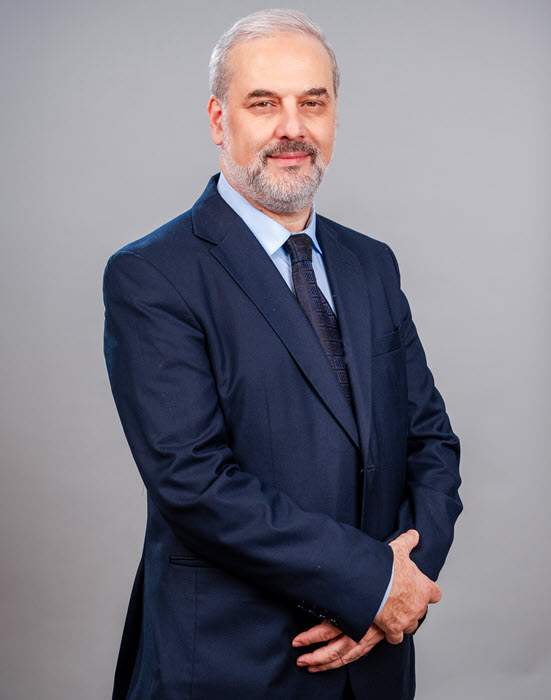
Meet the Programme Head

Country of Origin
Algeria

Qualification
PhD (Usul al-Fiqh), Masters (Usul al-Fiqh), B.A (Usul al-Fiqh), Registered Financial Planner.
Prof Dr Younes Soualhi
Prof Dr Younes is currently a Senior Research Fellow at ISRA Institute and the Head of the PhD in Applied Muamalat (Economics and Finance) programme, INCEIF University.
Prof Dr Younes Soualhi has a teaching experience of 30 years. He taught many Islamic finance subjects at Masters and PhD levels covering Shariah and Islamic Finance subjects. He published many articles and books in Islamic Banking and Finance. He got his B.A in Shari’ah from Emir Abdulqadir University for Islamic Sciences in Algeria, and his M.A & PhD from IIUM and UM (Malaysia) respectively. He also holds a Diploma in Human Sciences.
Admission Pathways & Entry Requirements
Multiple routes are available, depending on your academic background and professional experience.
Pathway 1
Academic Qualifications
- Master’s degree in Shariah or Islamic Finance from a recognised institution.
- Exceptional Bachelor’s degree holders may be admitted upon the University’s approval.
Pathway 2
APEL (Accreditation of Prior Experiential Learning) Assessment
- Minimum age: 35
- Recognised degree with CGPA 2.50 and above
- At least 5 years of relevant work experience in Islamic finance
- Must pass APEL assessment by MQA
Language Proficiency
- English: MUET Band 4 / IELTS 6.0 / TOEFL 79 iBT (or exemptions apply)
- Arabic: Native Arabic speaker or Arabic-medium graduate and IELTS Band 4.0 (Academic) or TOEFL 5.0 (Essential)
Investment
Programme Fees
Transparent fee structure for both learning modes.
💡 Fees are subject to additional charges as required by Malaysian authorities.
Face-to-Face
Local
RM62,240
International
RM74,240
Intakes
Start your PhD journey at the time that aligns with your personal and professional plans.
Application are accepted on a continuous basis throughout the year.
Early applications are encouraged for supervision matching, visa processing, and scholarship consideration.
Why Choose INCEIF University?
Join a globally recognised institution in Islamic finance and sustainability education. INCEIF is among the top 6% of business schools worldwide accredited by Association to Advance Collegiate Schools of Business (AACSB).
As the only postgraduate university dedicated exclusively to Islamic finance and sustainability, we offer unparalleled expertise and opportunities.

Awards and Recognitions
INCEIF University is proud to be recognised as one of the top Islamic finance universities in the world.

AACSB International Accreditation 2018

MQA Accreditation 2024

Berdaya Saing (Competitive) SETARA rating 2022

MyRA 4 Star recognition

Awarded to ISRA RMC & ISRA Consulting
Triple A: Asset Asian Awards
Islamic Economy Award 2018

Islamic Business & Finance Southeast Asia Awards 2017


INCEIF Alumni Says

The pragmatic and market-oriented approach of the PhD program at INCEIF immensely impacted my approach to applying my abilities to solve real-world problems without losing theoretical and academic robustness. During my PhD at INCEIF and my career at ISRA, I gained invaluable experience that helped me implement quality standards while working at the forefront of Islamic fintech.

Dr Farrukh Habib
Co-founder and Director Alif Technologies in Dubai, and Shariah Experts in London PhD in Islamic Finance (by Coursework and Dissertation)
INCEIF courses gave me the fundamentals and overview of finance issues. For example, in structuring a product, I am able to see the Shariah aspects and the business aspects of a product. Understanding the products from the bank’s perspective allows me to apply the more appropriate legal principles. The end result is a comprehensive product that is not only Shariah and legal compliant but makes business sense!

Dr Syed Adam Alhabshi
Partner at Raja, Darryl & Loh (Heading the Islamic Finance Practice) PhD in Islamic Finance (by Coursework and Dissertation)
I wanted to understand more profoundly the value proposition of IF and its contribution to the stability and sustainability of the economy. The best course I attended in INCEIF was Quran, and the Economy by Prof Abbas Mirakhor, which consolidated all the knowledge learnt into the Islamic perspective and impacted my view of IF.