 Search


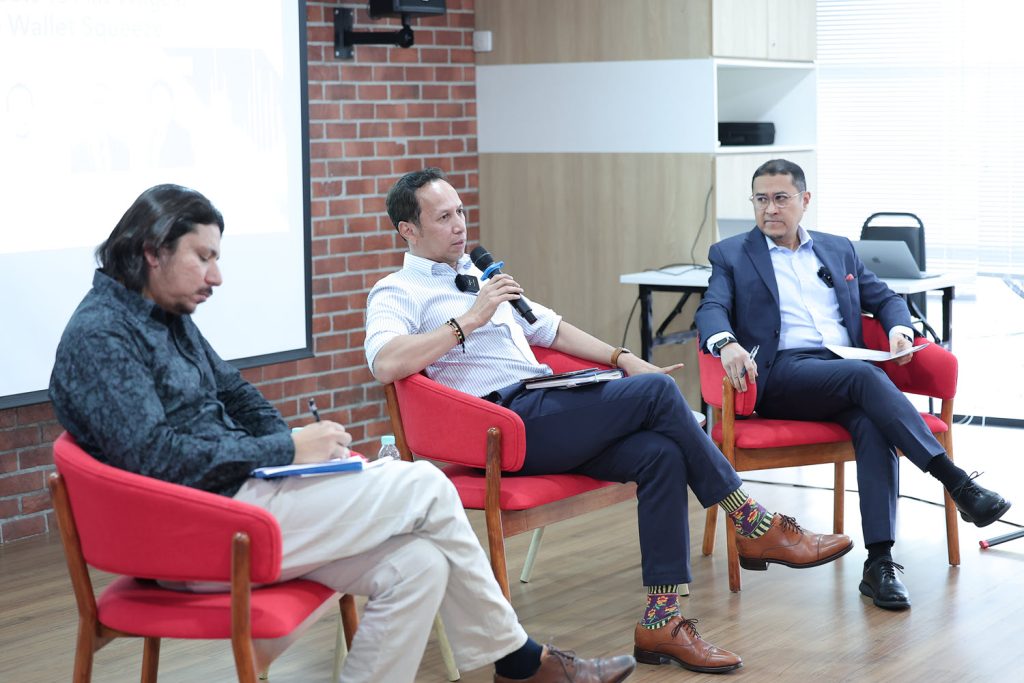
Kuala Lumpur, 4 July 2025 – As Malaysians continue to grapple with the dual pressures of rising living costs and stagnant income, urgent calls for structural reform and visionary leadership echoed at the recent ID@INCEIF panel discussion, titled “The Rising Costs vs Flat Wages: Escaping the Wallet Squeeze”, held yesterday at INCEIF University.
The session brought together two prominent voices in the nation’s economic landscape — Dr Muhammed Abdul Khalid, Research Fellow at the Institute of Malaysian and International Studies, UKM, and Mr Fraziali Ismail, Assistant Governor of Bank Negara Malaysia — in a critical discussion on the widening affordability gap confronting the Malaysian public.
Dr Muhammed highlighted that Malaysians were experiencing a steady erosion of purchasing power as wages failed to keep pace with the cost of living. “This is not just an economic issue — it’s a social one,” he said, citing alarming indicators such as persistent poverty and a learning crisis, where 42% of 10-year-olds were unable to read.
He pointed to the undervaluation of labour, which continues to hinder income growth and job quality. “We need to stop normalising low wages for hard work,” he added, emphasising the need for fiscal instruments that better support vulnerable communities.
Dr Muhammed also noted that Malaysia’s previous economic success was driven by “visionary and committed leadership,” and called for a return to values-based, inclusive policy-making. He criticised current subsidy structures as inefficient and misdirected, often benefitting unintended groups. To promote equity and avoid exclusion, he advocated for a universal subsidy model over narrowly targeted schemes.
He further proposed a more redistributive fiscal policy to close income gaps and drive social mobility. “Our tax and subsidy policies must uplift, not widen divides,” he stated.
Assistant Governor Fraziali echoed many of these concerns, adding that Malaysian household incomes have largely stagnated, while the economy continues to rely on an outdated low-cost model propped up by unsustainable subsidies.
“Our education system must evolve to meet the demands of a digital economy,” he stressed, pointing out gaps in technological literacy and workforce preparedness. He proposed a comprehensive reform agenda, including better revenue generation, strategic investments to boost quality job creation, and a stronger emphasis on governance and accountability.
Fraziali also emphasised that job creation must be central to any economic reform plan. “If investments don’t translate into employment, they hold little meaning for the broader population,” he said.
Both speakers agreed that sustainable progress hinges on investing in human capital. From digital upskilling to improved healthcare and education systems, reforms must empower citizens to thrive in a competitive global economy.
The panel was moderated by Assoc Prof Dr Eskandar Shah Mohd Rasid, CEO of ISRA Consulting, who concluded the session by reiterating the urgency of structural reform to ensure long-term financial resilience for all.
- For The Sun’s article on the discussion, click https://thesun.my/business-news/subsidy-reform-must-be-done-gradually-with-inclusion-as-core-principle-expert-IB14401911