 Search


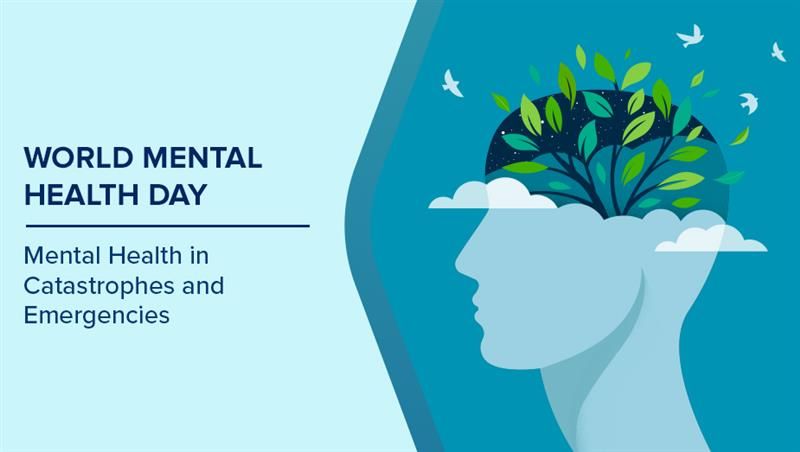
The theme of World Mental Health Day 2025 is “Access to Services — Mental health in catastrophes and emergencies.” Crises undeniably underscore the urgent need for mental health support, yet the truth is that barriers to access persist even in everyday life. Among the most pervasive of these barriers is stigma, the unseen force that keeps many from seeking the care they need.
In conjunction with World Mental Health Day on 10 October, INCEIF Counselling Services is launching a two-part series that explores how stigma restricts access to mental health support, and what practical steps can be taken to dismantle it.
Part 1: Understanding Stigma in Mental Health
Different Faces of Stigma
Stigma operates at multiple levels. Public stigma refers to negative attitudes from society, such as seeing mental illness as a weakness or spiritual failing. Structural stigma shows up in underfunded services and policies that deprioritise mental health. Self-stigma is when individuals internalise these messages, leading to shame and silence. Together, these layers create an environment where getting help feels riskier than enduring the illness itself.
A Global Problem with Local Consequences
Internationally, the World Health Organization (WHO) reports that up to 70% of people with mental illness receive no treatment in low and middle-income countries. In the UK, despite large-scale awareness efforts like Time to Change, many still delay help due to fear of judgment. In Canada, the Bell Let’s Talk campaign has raised millions for services but continues to battle persistent negative stereotypes.
Malaysia reflects these global trends. The National Health and Morbidity Survey (NHMS) 2015 found nearly 30% of adults experience mental health issues, and NHMS 2023 estimates one million Malaysians now suffer from depression. Among adolescents, cases have more than doubled in just a few years. Yet many still avoid seeking for help. A 2023 survey found that stigma and fear of judgment were leading reasons Malaysians did not seek treatment. University students, for example, often know about campus counselling services but hesitate to use them for fear of being labelled “weak or unstable.”
Why Awareness Is Just Not Enough
While public awareness of mental health is improving, knowledge alone does not dismantle stigma. People may understand depression is an illness yet still see it as a sign of weakness. This mismatch between knowledge and attitudes makes stigma more damaging than ignorance.
In the next part of this series, we explore how awareness must translate into action if genuine access to mental health services is to be achieved.
Part 2: From Awareness to Action — Building True Access
In Part One, we discussed stigma and how it restricts access to mental health services. Stigma acts as an invisible wall, keeping individuals from reaching out for the care they need, even when services exist. But recognising stigma is only the beginning, awareness must now become action.
From Awareness to Action
Awareness campaigns have achieved a great deal. The UK’s Time to Change, a campaign which ran from 2007 – 2021 normalised public conversations, while Canada’s Bell Let’s Talk which started in 2010 and has continued since, uses social media to both break silence and channel millions into services. The Headspace Father’s Campaign which was launched in Australia in 2017 successfully encouraged conversations about mental health within families, particularly between fathers and sons, to help identify issues and promote available support services. In Malaysia, the Ministry of Health launched the Talian Heal 15555 in 2022, a free tele-counselling hotline that has already received tens of thousands of calls, while NGOs like MIASA (Mental Illness Awareness and Support Association) run programmes such as StigmaWatch and youth advocacy workshops.
These efforts show that awareness can shift perceptions, but without structural change, stigma will continue to limit access. Awareness needs to become action through education, policy, institutions, security and the media.
What Action Looks Like
- Education: Incorporating mental health literacy into school and university curricula, so help-seeking becomes as natural as visiting a doctor.
- Policy: Enforcing anti-discrimination protections in workplaces and academic institutions.
- Institutions: Making counselling services visible and stigma-free, with flexible access such as online platforms.
- Security: Having more insurance policies cover outpatient mental health treatment and therapy.
- Media: Shaping portrayals of mental health to highlight resilience and recovery, rather than fear or shame.
Evidence of Change
Research shows contact-based interventions where people hear directly from those with lived experience are among the most effective at dismantling stigma. In the UK, public willingness to work with or live near someone with a mental health condition improved significantly between 2007 and 2019 after sustained anti-stigma efforts. In Malaysia, MIASA’s grassroots programmes demonstrate how peer-led support and advocacy can boost service use, but more resources and institutional partnerships are needed to scale impact. In Malaysia, The Befrienders, a 24-hour suicide prevention and emotional support hotline, has seen increasing use in recent years, with more people reaching out for help now compared to 2019. Most recently, in 2025, the Government of Malaysia decriminalised suicide attempts, moving away from crime to care.
Call to Action
For those in the education sector, the path forward is clear: go beyond awareness campaigns and commit to sustained action. Join campus initiatives, challenge stigma in everyday conversations, and build partnerships with NGOs driving change. Because ending stigma is more than an act of compassion, it is the essential first step toward ensuring that every person, everywhere, has true and equal access to mental health care.
References/Resources
- World Health Organization (WHO). (2022). World Mental Health Report: Transforming Mental Health for All. Geneva: WHO.
- National Institutes of Health, Malaysia. (2015). National Health and Morbidity Survey 2015 (NHMS 2015): Non-Communicable Diseases, Risk Factors & Other Health Problems.
- National Institutes of Health, Malaysia. (2023). National Health and Morbidity Survey (NHMS 2023): Key Findings on Mental Health.
- Ministry of Health Malaysia. (2025, February 19). Health Ministry declares war on stigma as mental health cases surge to one million in Malaysia. Malay Mail.
- Health Minister: Stigma, discrimination prevents access to mental health treatment and care. (2023, October 10). Malay Mail.
- From Crime to Care: Why Malaysia decriminalised suicide after a century. (2025, September 10). Malay Mail.
- MIASA Malaysia (Mental Illness Awareness & Support Association). (2024). StigmaWatch Programme. Retrieved from: https://miasa.org.my
- Henderson, C., Evans-Lacko, S., & Thornicroft, G. (2013). Mental illness stigma, help seeking, and public health programs. American Journal of Public Health, 103(5), 777–780.
- Clement, S., Schauman, O., Graham, T., et al. (2015). What is the impact of mental health-related stigma on help-seeking? A systematic review of quantitative and qualitative studies. Psychological Medicine, 45(1), 11–27.
- Time to Change. (2019). Changing attitudes to mental health: Evaluation report. UK.
- Bell Let’s Talk. (2022). Annual Impact Report. Canada.
- The call for help is getting louder, says Befrienders. (2021, June 25). Free Malaysia Today
- Father’s and Son’s Campaign Launched. (2017, June 10). Retrieved from www.headspace.org.au