 Search


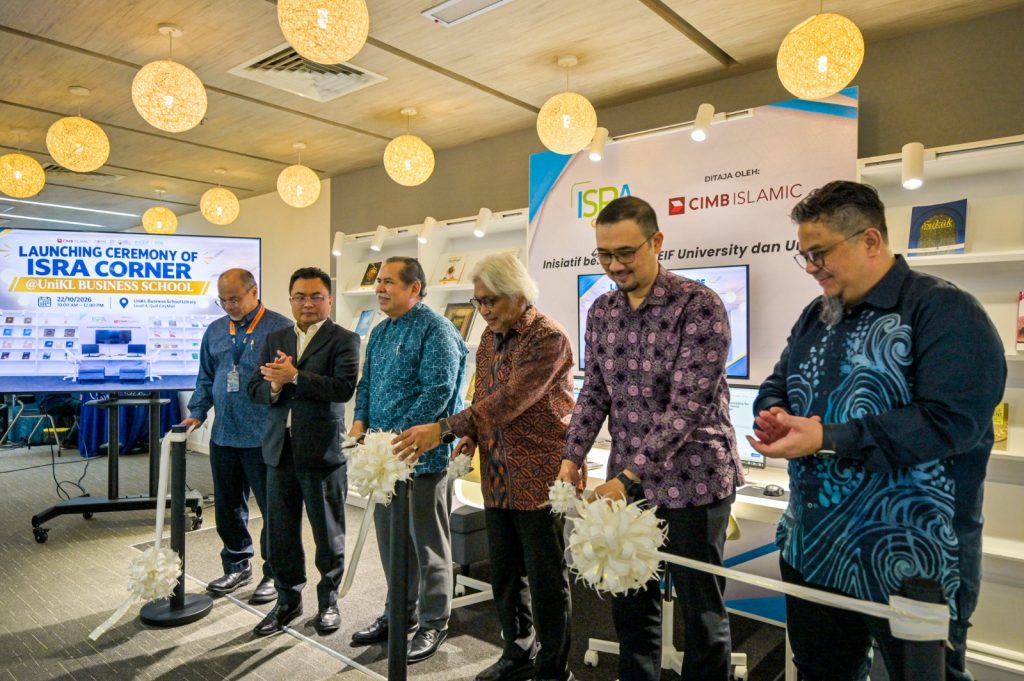
The final launch of the year marks another milestone in widening access to Islamic finance knowledge, strengthening research and nurturing future industry talent.
KUALA LUMPUR, 22 October 2026 – INCEIF University, in collaboration with CIMB Islamic Bank Berhad, marked the conclusion of its 2026 ISRA Corner initiative with the official launch of ISRA Corner at Universiti Kuala Lumpur (UniKL) Business School today, reinforcing a shared commitment to making credible Islamic finance knowledge more accessible to higher education communities.
The launch concludes a year of knowledge-sharing collaborations involving six institutions of higher learning, including Universiti Selangor (UniSEL), Universiti Malaysia Kelantan (UMK), Universiti Malaysia Sabah Labuan International Campus (UMSKAL), Universiti Islam Antarabangsa Sultan Abdul Halim Mu’adzam Shah (UniSHAMS), Universiti Utara Malaysia (UUM) and UniKL Business School.
While each launch has brought ISRA Corner to a different academic community, the shared objective remains consistent: to extend access to specialised Islamic finance resources, support academic research and strengthen the connection between classroom learning and industry practice.
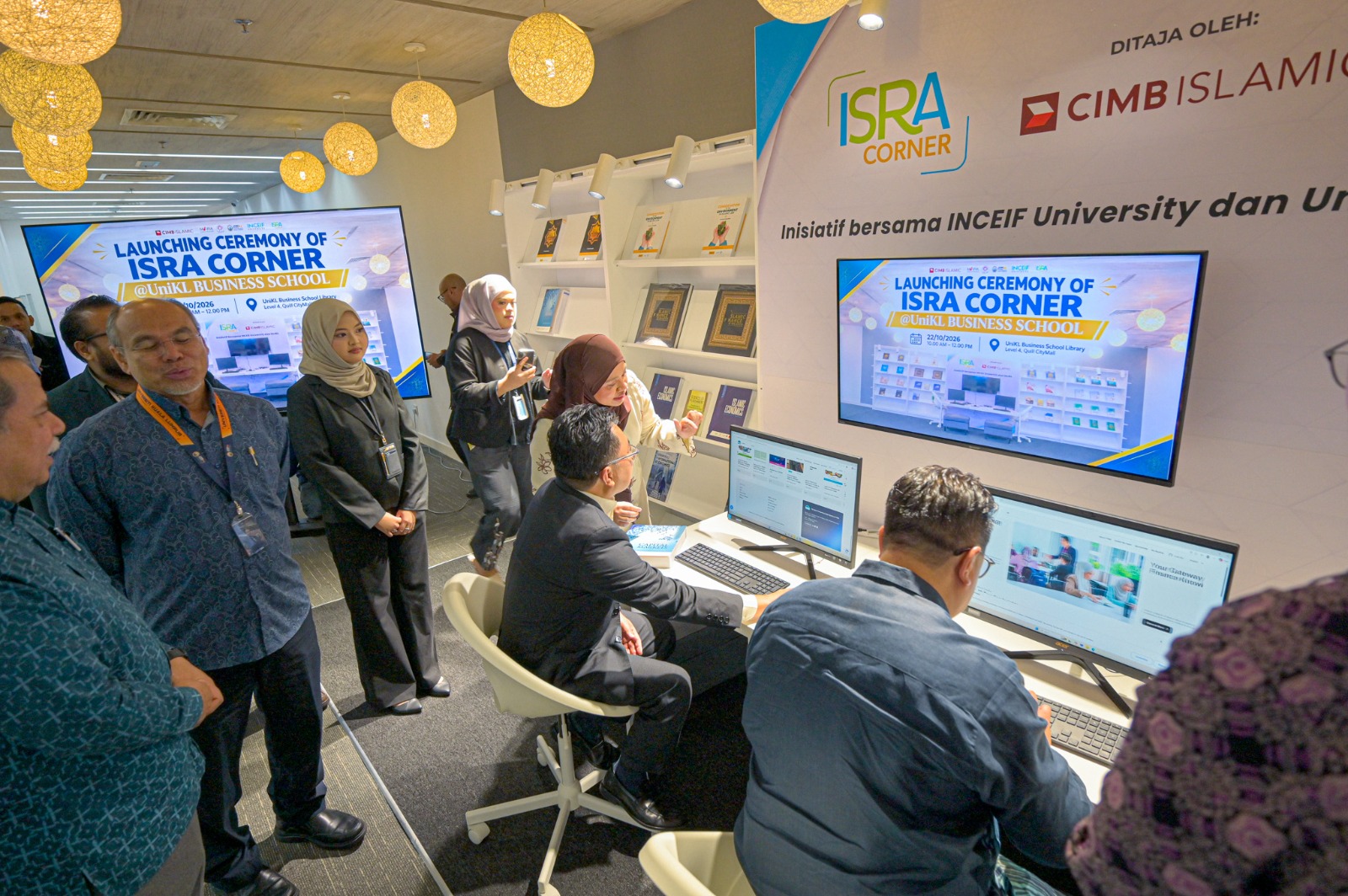
Through the continued support of CIMB Islamic, ISRA Corner provides participating universities with curated collections of Islamic finance publications and access to I-FIKR, INCEIF University’s digital knowledge repository. The platform brings together scholarly publications, research papers, industry reports, regulatory references and more than 2,000 fatwas and Shariah resolutions, making authoritative Islamic finance knowledge available to students, academics and researchers.
Professor Emeritus Dato’ Dr Mohd Azmi Omar, President and Chief Executive Officer of INCEIF University, highlighted the growing importance of accessible and reliable knowledge resources as the Islamic finance industry continues to expand globally.
He emphasised that developing Islamic finance talent requires more than academic qualifications. Equally important is access to credible, verified information that can guide research, informed decision-making and a deeper understanding of Shariah principles and industry developments.
With information increasingly available through digital platforms and artificial intelligence, he underscored the importance of ensuring that knowledge remains authoritative and properly validated.
He also reaffirmed INCEIF University’s commitment to supporting institutions of higher learning through continued access to physical publications and digital resources, contributing to its wider mandate of advancing Islamic finance knowledge and talent development.
Representing CIMB Islamic Bank Berhad, Mr Rahmatullah Dahrawi Edrus, Director, Islamic Commercial Banking, highlighted the bank’s longstanding support for ISRA Corner since 2021 and its commitment to widening access to specialised Islamic finance knowledge.
He emphasised that the initiative represents more than an investment in books or facilities. By making valuable academic and industry resources available at no cost to students and researchers, ISRA Corner helps ensure that access to knowledge is driven by the willingness to learn rather than the ability to pay.
He further encouraged students to make full use of the resources, recognising that the impact of ISRA Corner would ultimately be reflected in the individuals it inspires, the research it generates and the future leaders it helps develop.
Meanwhile, Mr Wan Ahmad Saifuddin Wan Ahmad Radzi, President and Chief Executive Officer of Universiti Kuala Lumpur, welcomed the establishment of ISRA Corner at UniKL Business School as a meaningful contribution to its academic and industry engagement efforts.
He highlighted its role in strengthening UniKL’s Islamic finance programmes, particularly by supporting teaching and learning, postgraduate research and greater engagement with scholars, practitioners and industry stakeholders. The initiative also aligns with UniKL’s commitment to developing industry-ready graduates equipped with relevant knowledge, sound ethical values and an understanding of contemporary Islamic finance practices.
Charting the Next Chapter for Islamic Finance
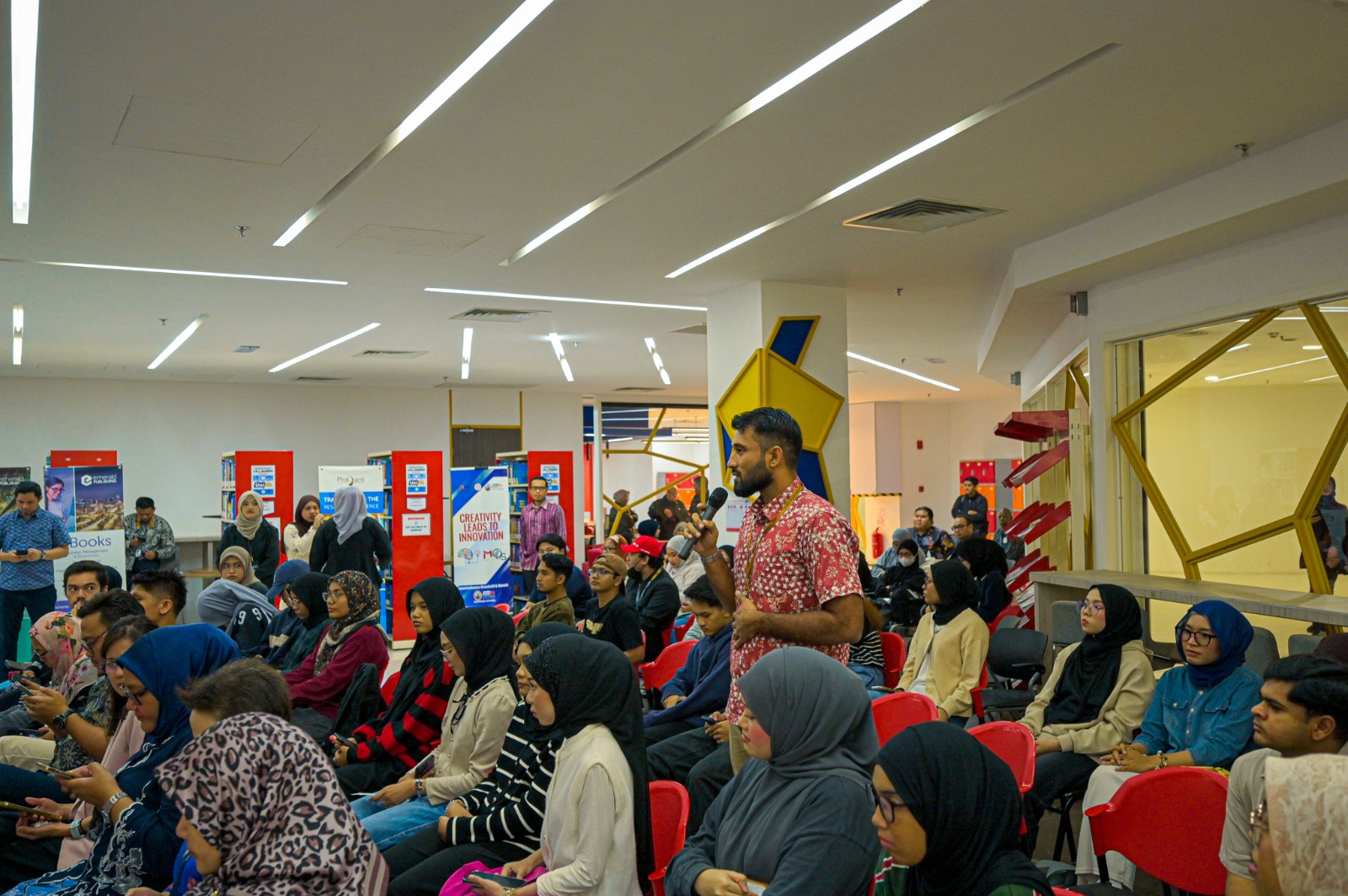
Adding a broader industry perspective to the launch, Tan Sri Muhammad Ibrahim, former Governor of Bank Negara Malaysia, delivered a special address titled “Islamic Finance, Where Do We Move from Here”, reflecting on the industry’s achievements and the challenges that lie ahead.
Tan Sri Muhammad acknowledged the substantial progress made by Islamic finance over the past four decades, particularly in developing financial institutions, regulatory frameworks and Islamic capital markets. However, he cautioned that the expansion of individual markets had yet to translate into a sufficiently integrated international Islamic financial system.
He highlighted market fragmentation as a key challenge, noting that differences in regulatory frameworks, legal documentation, Shariah interpretations and market infrastructure continue to constrain cross-border transactions and the efficient movement of capital.
He called for stronger cooperation among central banks, regulators and financial institutions to improve cross-border liquidity arrangements, deepen international sukuk markets and strengthen financial market connectivity.
Tan Sri Muhammad also challenged Shariah scholars to take a more proactive and collaborative approach to addressing differences in juristic interpretations, while preserving the integrity of Shariah principles. He emphasised the need for greater collective intellectual effort in developing practical solutions that would allow Islamic finance to operate more efficiently across jurisdictions.
Beyond market growth, he urged the industry to assess its success through its contribution to the real economy, including support for entrepreneurship, productive enterprises, employment, infrastructure and sustainable investment.
He also outlined a practical five-year agenda focused on identifying barriers to cross-border integration, implementing targeted initiatives and measuring progress through tangible outcomes rather than declarations of intent.
His address reinforced the importance of developing knowledgeable, forward-thinking professionals who can contribute to the next phase of Islamic finance, an aspiration closely aligned with the purpose of ISRA Corner.
As the 2026 series concludes at UniKL Business School, the collaboration between INCEIF University, CIMB Islamic and participating universities reflects the value of sustained partnerships in expanding access to specialised knowledge.
More than a collection of books or a dedicated space within a library, ISRA Corner represents an investment in the people who will shape the future of Islamic finance.
Although the year’s launches have concluded, the knowledge-sharing journey continues through the students, academics and researchers who will utilise these resources to explore new ideas, strengthen their expertise and contribute to the industry’s continued development.
END